
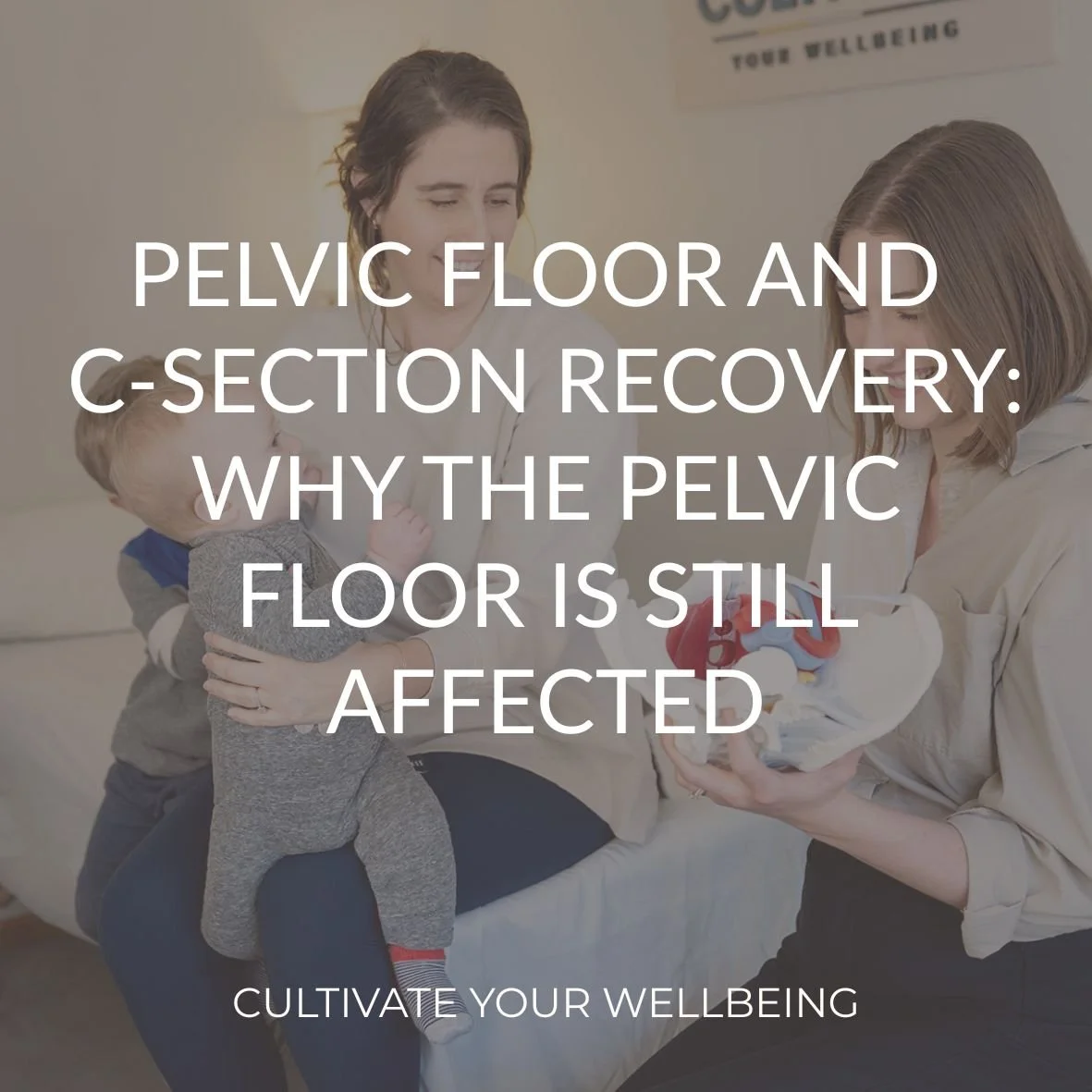
Pelvic Floor and C-Section Recovery: Why the Pelvic Floor Is Still Affected
If you gave birth by C-section, you may have wondered why anyone would recommend pelvic floor physical therapy. After all, you didn’t have a vaginal delivery. Wouldn’t that mean your pelvic floor was protected?
It is completely understandable to make that connection. Conversations about pelvic floor recovery often focus heavily on vaginal birth, tearing, and pushing. That can leave people who had a C-section wondering whether pelvic health support is really meant for them. But the pelvic floor is affected by much more than the way a baby is delivered.
Your body supported a pregnancy. You may have experienced labor or pushing before your C-section. You then had major abdominal surgery and began healing while caring for a newborn, often with very little sleep and few opportunities to rest.
A C-section changes the birth experience, but it does not erase the effects of pregnancy, surgery, healing, and postpartum life on your pelvic floor and the rest of your body.
Pregnancy Affects the Pelvic Floor Before Birth Happens
The pelvic floor is a group of muscles and connective tissues at the bottom of the pelvis. These tissues help support the bladder, bowel, uterus, and other pelvic organs. They also contribute to bladder and bowel control, sexual function, breathing, posture, and movement.
Throughout pregnancy, the pelvic floor supports the growing weight of the uterus and baby. At the same time, hormonal changes affect the muscles and connective tissues throughout the body. The abdominal wall lengthens, posture changes, and the way pressure moves through the abdomen and pelvis shifts.
Research comparing birth methods suggests that C-section delivery may lower the risk of certain pelvic floor conditions when compared with vaginal delivery, particularly pelvic organ prolapse and some forms of urinary incontinence. However, it does not eliminate the possibility of developing pelvic floor symptoms. Pregnancy itself places prolonged demands on the pelvic floor and abdominal wall before labor or delivery ever begins. This means you can experience leakage, urgency, constipation, heaviness, pain, or difficulty coordinating your pelvic floor even when your baby was born by C-section.
Not Every C-Section Experience Is the Same
Some C-sections are planned before labor begins. Others happen after contractions, hours of labor, or a period of pushing.
For someone who labored or pushed before surgery, recovery may include the combined effects of pregnancy, labor, and abdominal surgery. A long or physically demanding labor can affect pelvic floor symptoms even when the eventual birth is cesarean. Research continues to examine how labor duration, pushing, birth interventions, and delivery method interact, but it is clear that “C-section” does not describe one universal physical experience.
The emotional experience can also vary. A C-section may have been planned, peaceful, urgent, frightening, relieving, disappointing, empowering, or a combination of many emotions. How safe and supported you felt during birth can influence how you reconnect with your body afterward. Your recovery deserves to be supported in a way that reflects your individual birth experience and what your body needs now.
Your Pelvic Floor Does Not Work Alone
It is tempting to think of the pelvic floor as an isolated group of muscles that simply needs to become stronger. In reality, it works as part of a larger system.
Your respiratory diaphragm sits near the top of the abdominal cavity. Your pelvic floor forms the base. Your abdominal and back muscles surround the middle. Together, these areas help manage pressure, support your trunk, and respond to movement.
Research has demonstrated that the pelvic floor contributes to breathing and postural control and that the abdominal muscles and pelvic floor normally work together during many tasks. When you breathe in, the diaphragm descends and the pelvic floor typically lengthens slightly. When you breathe out or create effort, the abdominal wall and pelvic floor respond to help manage the task.
Pressure is not inherently harmful. We need abdominal pressure to cough, laugh, lift, have a bowel movement, stand up, exercise, and carry our children. The goal is not to avoid pressure. The goal is to help your body manage it in a way that feels coordinated and appropriate for the task.
After a C-section, this coordination can feel unfamiliar. The abdominal wall is healing, the incision may feel tender, and the body may naturally protect the area. The pelvic health therapists at Cultivate can help you reconnect these systems without forcing, gripping, or rushing the healing process.
How Pain Can Shape the Way You Move
After abdominal surgery, it is normal to protect the area that’s healing. In the early days, you may move more carefully, avoid certain positions, use your arms for support when getting in and out of bed, or limit twisting and lifting based on your postoperative precautions. These strategies serve an important purpose while the tissues are healing and pain is still present.
As recovery progresses, however, some protective patterns can remain even after they are no longer needed. You may continue holding your breath during effort, keeping your abdomen tense throughout the day, avoiding standing fully upright, touching your scar, or hesitating to use your abdominal muscles because the area still feels vulnerable.
These responses are understandable. Your body is trying to keep you safe. But over time, they can affect how the abdominal wall, diaphragm, back, hips, and pelvic floor share the work of movement.
Pelvic health physical therapy can help you gradually move out of those protective patterns when it is appropriate, rebuild confidence in your body, and find more comfortable ways to lift, carry, walk, exercise, and return to daily activities.
Pelvic Floor Symptoms Can Still Occur After a C-Section
Not everyone develops pelvic floor symptoms after a C-section, but if you do notice changes, you do not have to ignore them or assume they are simply part of postpartum recovery.
You may notice:
Urinary leakage when coughing, sneezing, jumping, or exercising
A sudden or frequent need to urinate
Constipation, straining, or difficulty emptying your bowels
Pelvic pressure or heaviness
Abdominal, pelvic, hip, back, or tailbone pain
Pain or discomfort with intimacy
Difficulty relaxing or sensing your pelvic floor
A feeling of weakness or disconnection through your abdomen
Uncertainty about returning to lifting, exercise, running, or other activities
Pelvic floor dysfunction is not always caused by muscles that are simply “weak.” The muscles may be weak, tense, painful, overactive, poorly coordinated, or a combination of these. That is why doing more Kegels is not the right answer for everyone.
Someone experiencing leakage may need strength and timing. Someone experiencing pain or difficulty emptying their bowels may first need help relaxing and lengthening the pelvic floor. Another person may have adequate pelvic floor strength but struggle to coordinate it with breathing, abdominal support, or movement. An individualized assessment helps determine what your body needs.
What About the C-Section Scar?
A C-section incision heals through multiple layers of skin, connective tissue, abdominal fascia, and the uterus. As healing progresses, the scar may feel numb, sensitive, firm, tight, itchy, or uncomfortable. Scar mobility can be one part of C-section rehabilitation, but it is not the entire recovery story.
A pelvic health physical therapist may assess how the tissues around the incision move, how comfortable you feel touching the area, and whether sensitivity or restriction is affecting posture, movement, clothing tolerance, exercise, or intimacy.
Scar work should only begin when the incision has healed appropriately and your medical provider has addressed any signs of infection or complications.
Read more about scar mobility in our blog How Scar Tissue Can Affect Your Pelvic Floor, Core, and Recovery.
How Pelvic Health Physical Therapy Can Support C-Section Recovery
Pelvic health physical therapy can help you better understand how your body is healing and what may be contributing to the symptoms or challenges you are noticing.
At Cultivate Your Wellbeing, we look beyond the incision itself. We consider how you are breathing, moving, lifting, and using your abdominal muscles during everyday activities. We also assess how your pelvic floor is coordinating with the rest of your core, because recovery is not simply about whether one area is “strong enough.” It is about how your abdominal wall, pelvic floor, breath, hips, back, and the rest of your body work together.
That care looks different for every person. For one patient, treatment may focus on rebuilding abdominal strength and feeling more supported when lifting a baby, carrying a car seat, or getting up from the floor. For someone else, it may involve learning how to relax and coordinate the pelvic floor, improve bowel movements, or reduce discomfort with intimacy. Another person may be working toward running, strength training, returning to a physical job, or simply moving through the day with less hesitation and more confidence.
As healing allows, we may also assess the tissues around the incision and address scar sensitivity, discomfort, or limited mobility. Hands-on care, breathing strategies, movement retraining, pelvic floor rehabilitation, and gradual strength progression may all be part of treatment. The plan is always shaped around your birth experience, symptoms, stage of healing, and the activities you want to return to.
Pelvic floor strengthening can be helpful for some postpartum concerns, including urinary leakage, but pelvic health therapy is not about giving everyone the same set of Kegels. The pelvic floor may need strength, relaxation, better timing, or improved coordination with the abdominal wall and breath. Our role is to determine what your body needs rather than asking you to guess.
Most importantly, we want you to leave with a better understanding of your body and a clear path forward. Instead of wondering whether a sensation is normal, avoiding movement because you are unsure what is safe, or trying random exercises online, you can take thoughtful, gradual steps toward the activities that matter to you.
Medical Clearance Is Not the Same as Feeling Ready
The postpartum medical visit is very important. Your medical provider assesses healing, screens for complications, and determines whether there are medical reasons to restrict activity. But being medically cleared does not always mean you feel ready to return immediately to every activity you did before pregnancy.
The American College of Obstetricians and Gynecologists recommends that exercise be resumed gradually after pregnancy, with timing influenced by delivery method and medical or surgical complications. ACOG also describes postpartum care as an ongoing process rather than a single visit.
Your readiness to run, lift heavy weights, return to a physical job, or complete a demanding workout may depend on more than the number of weeks since birth. Symptoms, sleep, healing, strength, confidence, feeding demands, prior activity level, and access to support all matter.
The pelvic health physical therapists at Cultivate Your Wellbeing can help bridge the gap between being medically cleared to move and feeling physically prepared for the activities that matter to you.
You Do Not Have to Wait Until Something Is “Really Wrong”
You do not need to be leaking every day, experiencing severe pain, or struggling to function before asking for support. Pelvic health physical therapy can help address symptoms, but it can also provide education and guidance during a season when your body may feel unfamiliar.
Perhaps you want to learn how to lift your baby without holding your breath. Maybe you want to return to running, strength training, work, intimacy, or caring for older children. You may simply want reassurance that your healing and movement feel appropriate. Those are all valid reasons to come in.
It is also not too late if your C-section was months or years ago. Bodies remain adaptable. Long-standing pain, scar sensitivity, leakage, constipation, weakness, or difficulty returning to activity still deserve attention.
Your Recovery Does Not Need to Look Like Anyone Else’s
There is no single timeline for recovering from a C-section. Your birth experience, symptoms, sleep, support system, feeding choices, medical history, prior activity, and goals are uniquely yours. Recovery is rarely a smooth line forward, especially while caring for a new baby.
Needing help does not mean your body has failed. Taking time does not mean you are falling behind. Pelvic health physical therapy gives you a place to ask questions, understand your body, and make a plan based on where you are today and where you would like to go.
You did not “skip” pelvic floor recovery because you had a C-section. Your pelvic floor, abdominal wall, breathing system, and entire body supported you through pregnancy and birth. You deserve support that helps you feel informed, capable, and confident as you move forward.
At Cultivate Your Wellbeing, our pelvic health physical therapists provide individualized, one-on-one care for C-section and postpartum recovery. Whether you are experiencing symptoms or simply want guidance returning to the activities you love, we are here to listen, help you understand what is happening, and create a recovery plan designed for you.
Ready to feel more confident in your recovery? Contact us to schedule an appointment or begin with a free 15-minute consultation at our Mequon or Brookfield location.