
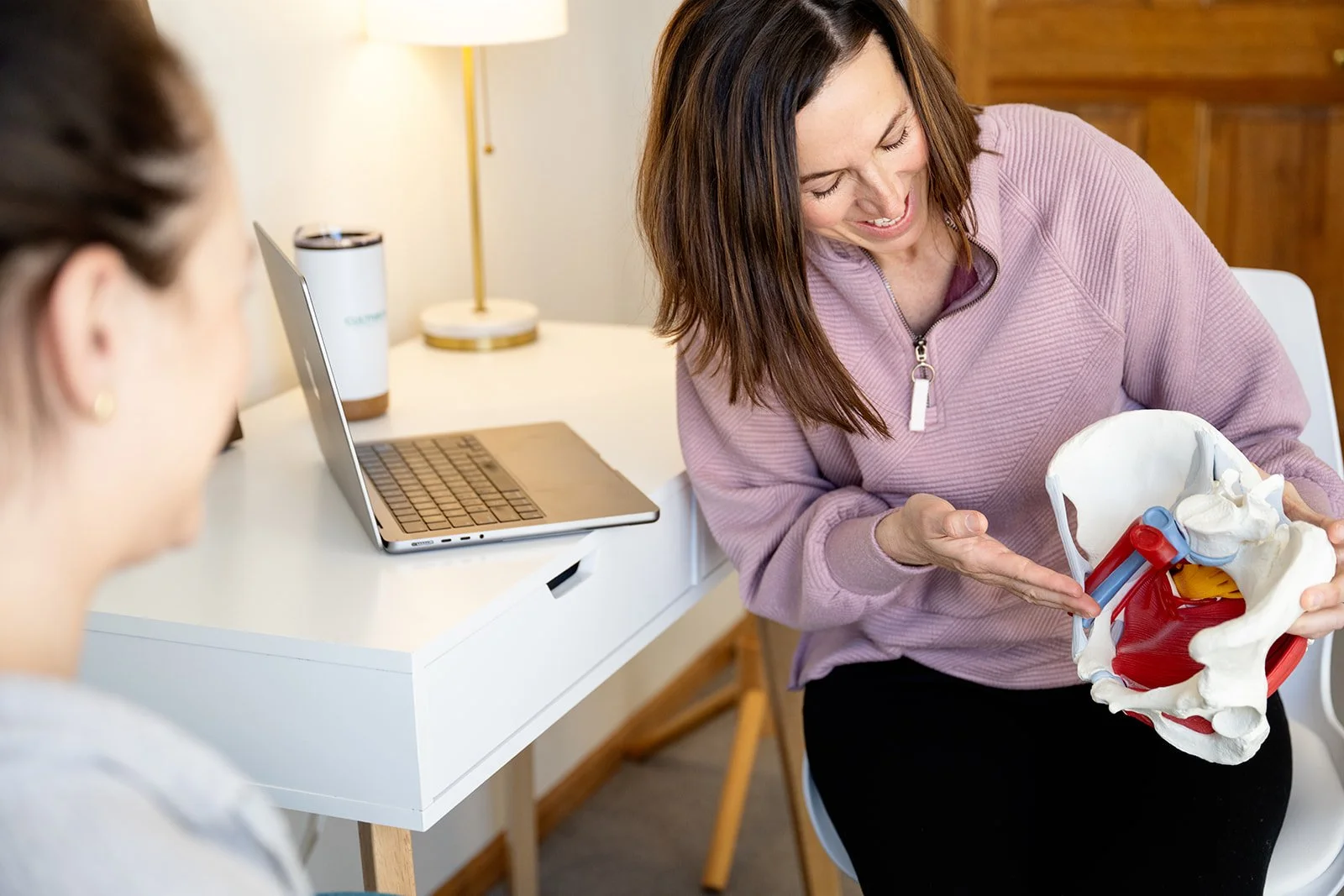
Pelvic Organ Prolapse Physical Therapy in Mequon & Brookfield, WI
Being told you have pelvic organ prolapse can feel scary. You may notice heaviness, pressure, a bulging sensation, or the feeling that something is “falling out.” You may feel nervous about exercise, lifting your kids, returning to running, having intimacy, or simply getting through your day without thinking about your symptoms.
At Cultivate Your Wellbeing, we provide pelvic organ prolapse physical therapy in Mequon and Brookfield, WI, serving the North Shore, the Brookfield area, and surrounding communities. Our doctors of physical therapy and certified pelvic health specialists take a whole-body, individualized approach to prolapse care.
Prolapse is common, and while symptoms can feel alarming, a prolapse diagnosis does not mean your body is broken or that you have to stop doing the things you love.
At Cultivate Your Wellbeing, our goal is to help you understand what is happening, reduce fear, improve symptoms, and build a plan that supports your body, your goals, and your real life.
Pelvic organ prolapse happens when the support system for the pelvic organs, including the vaginal walls, fascia, connective tissue, and pelvic floor, is not providing the same level of support it once did. As a result, the bladder, uterus, or rectum may press into the vaginal walls and create symptoms such as heaviness, pressure, or bulging.
Prolapse is not your organs “falling out.” It is a change in support through the vaginal walls and surrounding tissues. That distinction matters, because the way we talk about prolapse can either increase fear or help you feel more informed and in control.
For some people, prolapse symptoms are mild and come and go. For others, symptoms feel more noticeable with standing, walking, lifting, exercise, constipation, or at the end of the day. Many people worry they will make things worse, that they should avoid activity, or that surgery is their only option.
We want you to know that there are options, and pelvic floor physical therapy can be a helpful part of understanding and managing prolapse symptoms.
Common prolapse symptoms we treat

At Cultivate Your Wellbeing, we commonly support patients with:
Pelvic heaviness or pressure
Vaginal bulging or a sensation of tissue at the vaginal opening
Symptoms that worsen with standing, walking, lifting, or exercise
A “falling out” sensation
Pelvic pressure at the end of the day
Bladder leakage, urgency, or difficulty emptying
Constipation, straining, or incomplete bowel emptying
Low back, hip, pelvic, or tailbone discomfort
Pain or discomfort with intimacy
Fear of lifting, running, strength training, or returning to exercise
Symptoms after pregnancy or birth
Symptoms during perimenopause or menopause
Symptoms after hysterectomy or pelvic surgery
You do not need to know what type or grade of prolapse you have before starting care. Part of our role is helping you understand your symptoms, what may be contributing to them, and what your body may need next.
Heaviness is not always just about prolapse
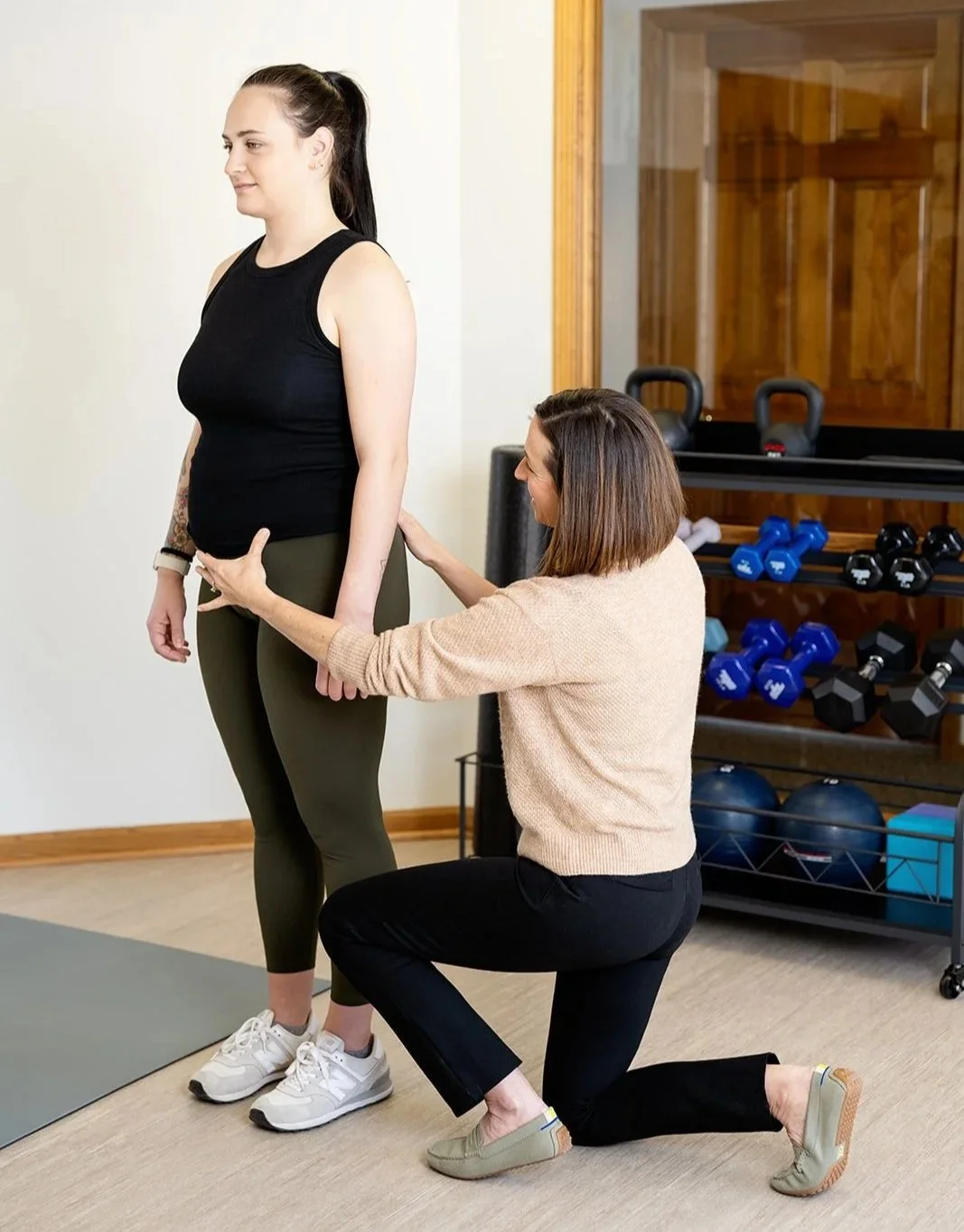
Pelvic heaviness, pressure, or a “tampon-like” sensation can be connected to prolapse, but prolapse is not the only possible reason those symptoms show up.
Sometimes heaviness is related to pelvic floor tension, breath-holding, pressure management, constipation, fatigue, core coordination, scar tissue, or how your body is responding to load. A pelvic floor can also be both tense and not supporting well. This is one reason a generic plan does not always help.
At Cultivate, we look at the full picture. We want to understand when your symptoms show up, what makes them better or worse, how your pelvic floor is coordinating, how your body is managing pressure, and what you want to get back to with more confidence.
Prolapse symptoms are often about more than “weakness”
Many people are told to strengthen their pelvic floor when they have prolapse. For some people, strengthening is helpful. But prolapse care is not always as simple as squeezing more or working harder. Sometimes the pelvic floor is weak. Sometimes it is tense, overactive, poorly coordinated, or not relaxing well. Sometimes symptoms are related to how your breath, deep core, pelvic floor, posture, bowel habits, and movement patterns work together when pressure changes.
Pressure itself is not bad. Your body needs pressure to breathe, lift, move, exercise, and stabilize. The goal is not to avoid pressure altogether. The goal is to help your body manage pressure in a way that supports your symptoms, your strength, and your return to the activities you care about.
That is why we do not use a one-size-fits-all approach. We assess what your body is actually doing so we can build a plan that makes sense for you.
How Cultivate Your Wellbeing can help with prolapse
At Cultivate Your Wellbeing, we start by listening to your story, your symptoms, and what you are hoping to return to with more confidence. Prolapse symptoms can feel scary, so education is a big part of our care. We want you to understand what is happening in your body, what may be contributing to your symptoms, and what options you have.

Pelvic floor assessment and coordination
Strengthening when appropriate/Relaxation when needed
Breathwork and pressure management
Core support and strengthening
Hip, rib, spine, and pelvic mobility
Posture and movement strategies
Lifting mechanics for daily life, caregiving, and exercise
Bowel and bladder support
Scar or abdominal mobility when relevant
Guidance for walking, running, strength training, Pilates, or impact exercise
Education about pessaries, medical options, or when collaboration with a provider may be helpful
A personalized home program that fits your life
Your treatment plan is individualized and may include:
Our goal is not to give you a list of things to avoid. Our goal is to help you feel informed, supported, and more confident moving through your life.
Exercise is an important part of prolapse recovery
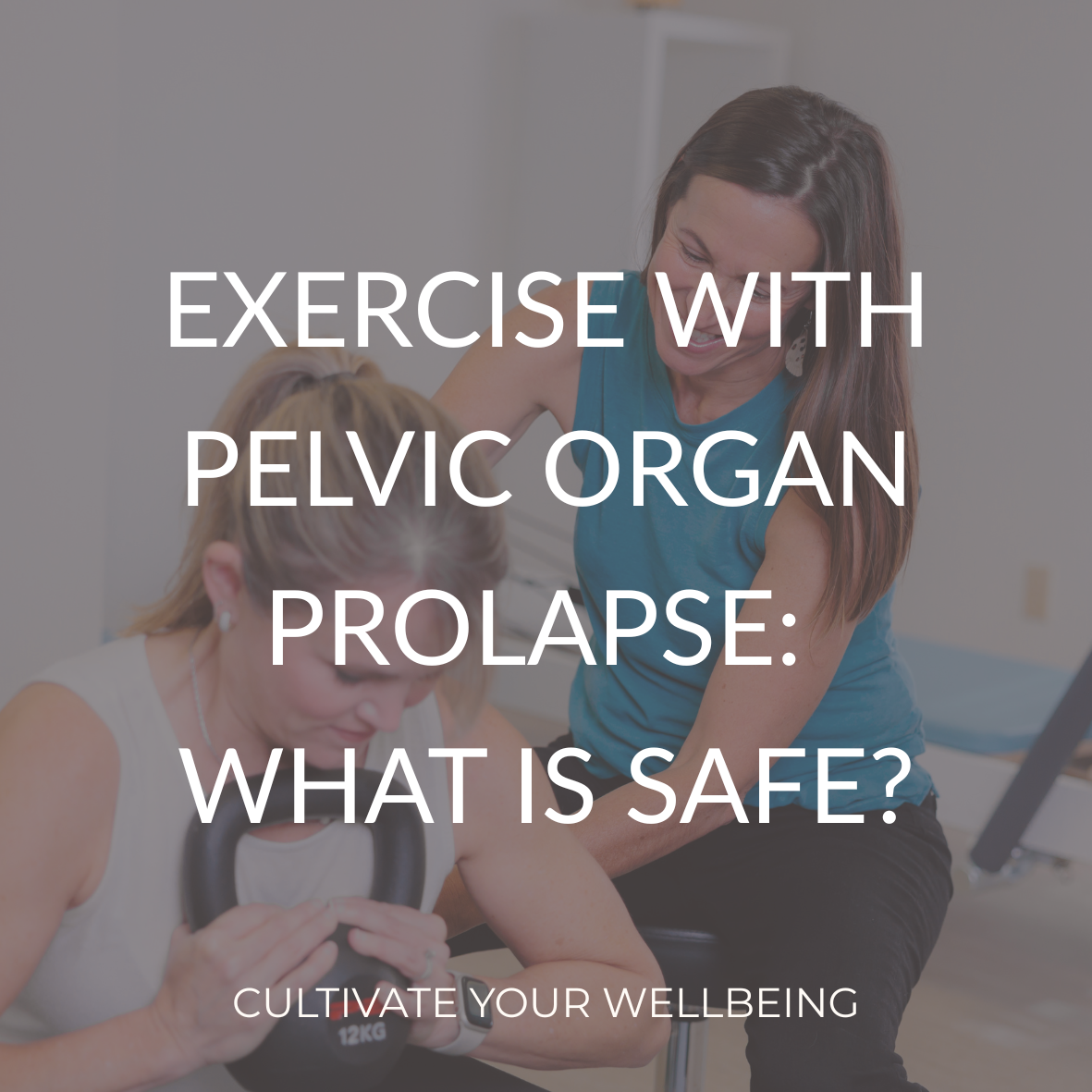
It is common to feel afraid to move when you have prolapse symptoms. Many people worry that lifting, running, jumping, strength training, or even walking too much will make things worse. But movement is not the enemy.
Exercise can be an important part of prolapse care when it is introduced in a way your body can manage. Instead of creating a long list of things you are “not allowed” to do, we help you understand how your body responds to load, pressure, fatigue, breath, posture, and movement.
If symptoms show up during or after exercise, that does not automatically mean you caused damage or that the activity is off-limits forever. Symptoms are information. They may mean your body needs a different strategy, a different progression, more strength, better pressure management, more recovery, or support with bowel and bladder habits. Our goal is to help you return to the activities you care about with more confidence and less fear.
Prolapse treatment may include more than physical therapy
Pelvic floor physical therapy is often a helpful first step for prolapse symptoms, but it is not the only option. It can also be an important part of your care alongside other supports, such as a pessary or surgery.
Some people benefit from a pessary, which is a removable support device fitted by a trained medical provider. A pessary can be especially helpful for people who want more support during daily life, exercise, or certain seasons of life.
Others may need or choose surgery, especially if symptoms are significantly impacting quality of life or conservative care is not enough. Surgery is not a failure, and choosing surgery does not mean physical therapy is no longer valuable.
At Cultivate Your Wellbeing, we believe learning how to manage pressure, improve movement strategies, support bowel and bladder habits, build strength, and coordinate your pelvic floor and core are helpful skills no matter what treatment path you choose. These tools can support your symptoms now, help you feel more confident in daily life, and may also support long-term success if you use a pessary or choose surgery.
Our role is to support your body, help you understand your options, and collaborate with your healthcare team when needed. We are not here to talk you into or out of any specific path. We are here to help you make informed decisions and feel supported in whatever next step is right for you.
Prolapse and bowel or bladder symptoms often overlap
Prolapse symptoms often show up alongside bladder or bowel concerns, including leaking, urgency, difficulty emptying your bladder, constipation, straining, or the feeling that you cannot fully empty your bowels. Straining and constipation can increase pressure through the pelvis and make prolapse symptoms more noticeable for some people. Bladder urgency or leakage may also be connected to pelvic floor coordination, tissue support, breathing, posture, and daily habits. At Cultivate, we look at the full picture so your plan supports more than just the bulge or pressure sensation. We want to help your whole system function better.
You deserve care that helps you feel confident in your body again.
Prolapse symptoms can affect more than your pelvis. They can influence how you move, how you exercise, how you feel during intimacy, and how much you trust your body in daily life. You deserve more than fear-based advice or a list of activities to avoid.
At Cultivate Your Wellbeing, we take time to listen to your concerns, explain what may be contributing to your symptoms, and build a plan that helps you feel more supported, informed, and confident. Our care is education-first because we believe understanding your body is one of the most important parts of feeling better and moving forward.
Related reading from our blog
Want to learn more? These resources may help you better understand how pelvic floor physical therapy can support pelvic organ prolapse.
Patient Experiences
“Katie is professional, personable, and at ease. She really asks a lot of questions and makes great suggestions. She takes time to get to the source of your issues and is very helpful, whether it be physical therapy, lifestyle changes, or exercises. She really simplifies things. Above all, she is funny and makes you feel at ease about a sometimes sensitive issue. I highly recommend Katie and Cultivate Your Wellbeing!”
“Jennie is a great listener and is good at recommending solutions. Anytime I had even a small issue with an exercise, she offered helpful cues to improve my form or offered alternative exercises. I am entirely pleased with the outcome of my course of therapy.”
“I highly recommend Cultivate Your Wellbeing for anyone seeking pelvic floor therapy. Their expertise, kindness, and respect create an environment where you can truly feel comfortable and cared for. I’m so grateful for the experience and the positive impact it has had on my well-being.”
Frequently Asked Questions
-
Pelvic organ prolapse happens when the support system for the pelvic organs, including the vaginal walls, fascia, connective tissue, and pelvic floor, is not providing the same level of support it once did. As a result, the bladder, uterus, or rectum may press into the vaginal walls and create symptoms such as heaviness, pressure, or bulging.
Prolapse is not your organs “falling out.” It is a change in support through the vaginal walls and surrounding tissues. Understanding that difference can help reduce fear and make it easier to understand your options.
-
Prolapse symptoms can feel different for different people. Some people notice pelvic heaviness, pressure, vaginal bulging, or a sensation that something is sitting lower. Others describe a dragging feeling, a tampon-like sensation, pressure at the end of the day, or symptoms that increase with standing, walking, lifting, exercise, or constipation.
Some people also notice bladder or bowel symptoms, including leaking, urgency, difficulty emptying, constipation, straining, or the feeling that they cannot fully empty their bowels. Others report low back, pelvic, hip, or tailbone discomfort.
The level of distress that comes with prolapse can also vary. For some people, symptoms are mild and manageable. For others, the sensation of heaviness or bulging can feel very alarming and affect confidence, movement, intimacy, or daily life. It is also important to know that the degree or grade of prolapse does not always match the severity of symptoms. A person with a mild prolapse may feel very symptomatic, while someone with a more visible prolapse may have fewer symptoms.
At Cultivate Your Wellbeing, we look beyond the grade of prolapse. We want to understand what you are feeling, when symptoms show up, how your body is managing pressure and movement, and what support would help you feel more confident.
-
Yes. Pelvic floor physical therapy can help many people manage prolapse symptoms and feel more confident in daily life, exercise, and movement.
At Cultivate Your Wellbeing, we look at how your pelvic floor, core, breathing, posture, movement patterns, bowel habits, bladder habits, and pressure system are working together. Your plan may include pelvic floor coordination, strengthening when appropriate, relaxation when needed, pressure management, movement strategies, bowel and bladder support, and guidance for returning to the activities you care about.
-
Not necessarily. Kegels can be a helpful tool for some people, especially if you need help finding the pelvic floor muscles or learning how to coordinate a contraction. But Kegels alone are not the full answer for prolapse symptoms.
Pelvic floor support is about more than squeezing. Your symptoms may be influenced by how your pelvic floor coordinates with your breath, core, posture, bowel habits, lifting mechanics, and daily movement. For many people, there are more functional ways to strengthen and support the pelvic floor than simply doing repeated contractions.
At Cultivate Your Wellbeing, we assess what your body is actually doing so we can build a plan that helps you manage pressure, improve coordination, build strength, and feel more confident in real-life activities.
-
Yes. Exercise is important for your overall health, strength, bone density, mood, metabolism, and long-term wellbeing. Having prolapse symptoms does not mean you should stop moving or avoid exercise altogether.
The goal is not to give you a long list of things you are “not allowed” to do. The goal is to help you understand how your body responds to load, pressure, fatigue, breath, posture, and movement. Many people with prolapse can lift, run, strength train, do Pilates, and stay active with the right support, strategy, and progression.
If symptoms show up during or after exercise, that does not automatically mean you caused damage or that the activity is off-limits forever. Symptoms are information. They may mean your body needs a different breathing strategy, a different progression, more strength, better pressure management, more recovery, or support with bowel and bladder habits.
At Cultivate Your Wellbeing, we help you modify when needed, build strength where it matters, improve pressure management, and progress in a way that supports your symptoms and goals. Our goal is to help you return to movement with more confidence and less fear.
-
Yes, pelvic floor physical therapy can still be very helpful if you are considering surgery for pelvic organ prolapse.
Surgery can address the structural support of prolapse, but it does not automatically change the habits, movement strategies, pressure patterns, bowel or bladder issues, or strength deficits that may have contributed to symptoms in the first place. Learning how to manage pressure, improve movement mechanics, support bowel and bladder habits, build strength, and coordinate your pelvic floor and core can be helpful before and after surgery.
At Cultivate Your Wellbeing, our goal is not to talk you into or out of surgery. Our role is to help you understand your body, support your symptoms, and build skills that can help you feel more confident now and support your long-term success, whatever treatment path you choose.
Some people also benefit from a pessary, which is a removable support device fitted by a trained medical provider. A pessary can be helpful for daily life, exercise, or certain seasons of life, and pelvic floor physical therapy can support you alongside pessary use as well.
What to Expect
Your care is always one-on-one and tailored to your goals. Sessions may include hands-on treatment, movement and exercise, and education to help you better understand your body and symptoms. We move at your pace and prioritize your comfort every step of the way.
Ready to get support for prolapse symptoms?
If you are dealing with pelvic heaviness, pressure, bulging, bladder or bowel symptoms, or fear around movement and exercise, pelvic floor physical therapy can help.
Call, text, or fill out the contact form, whichever is easiest for you. Our team can answer questions, help you schedule at our Mequon or Brookfield location, or set up a free 15-minute virtual consult if you are not sure whether pelvic health physical therapy is the right next step.
Wondering if Pelvic Health Physical Therapy is right for you? Book a Free 15 Minute Consult.