

Men’s Pelvic Health Physical Therapy
Men can experience pelvic floor concerns such as bladder leaks, urgency and frequency, constipation, pelvic pain, musculoskeletal pain, and post-surgical recovery needs. At Cultivate Your Wellbeing, we provide pelvic health physical therapy for men in Mequon and Brookfield, WI, with individualized care to help you reduce symptoms, improve function, and return to what matters most.
What to Expect at Cultivate Your Wellbeing
Pelvic floor symptoms in men can feel frustrating, confusing, and sometimes difficult to talk about. At Cultivate Your Wellbeing, your first visit gives us time to listen to your story, understand your symptoms, and talk through what you want to feel more confident doing again.
Our care is education-first because we believe one of the best ways to support healing is to help you understand your body. When you understand what may be contributing to your symptoms, your plan starts to make more sense and progress feels more possible.
Each visit is one-on-one with a doctor of physical therapy and tailored to your body, your comfort level, and your goals. Depending on your needs, treatment may include education, hands-on care, movement and exercise, breathwork, pelvic floor coordination, abdominal or scar work, visceral techniques, dry needling, cupping, bladder and bowel strategies, and a personalized home program.
We will always explain your options, answer your questions, and ask for your consent before any part of your exam or treatment. Our goal is for you to leave not only with support for the issue that brought you in, but also with a better understanding of your body and practical tools you can use long after your visits with us.
How We Help
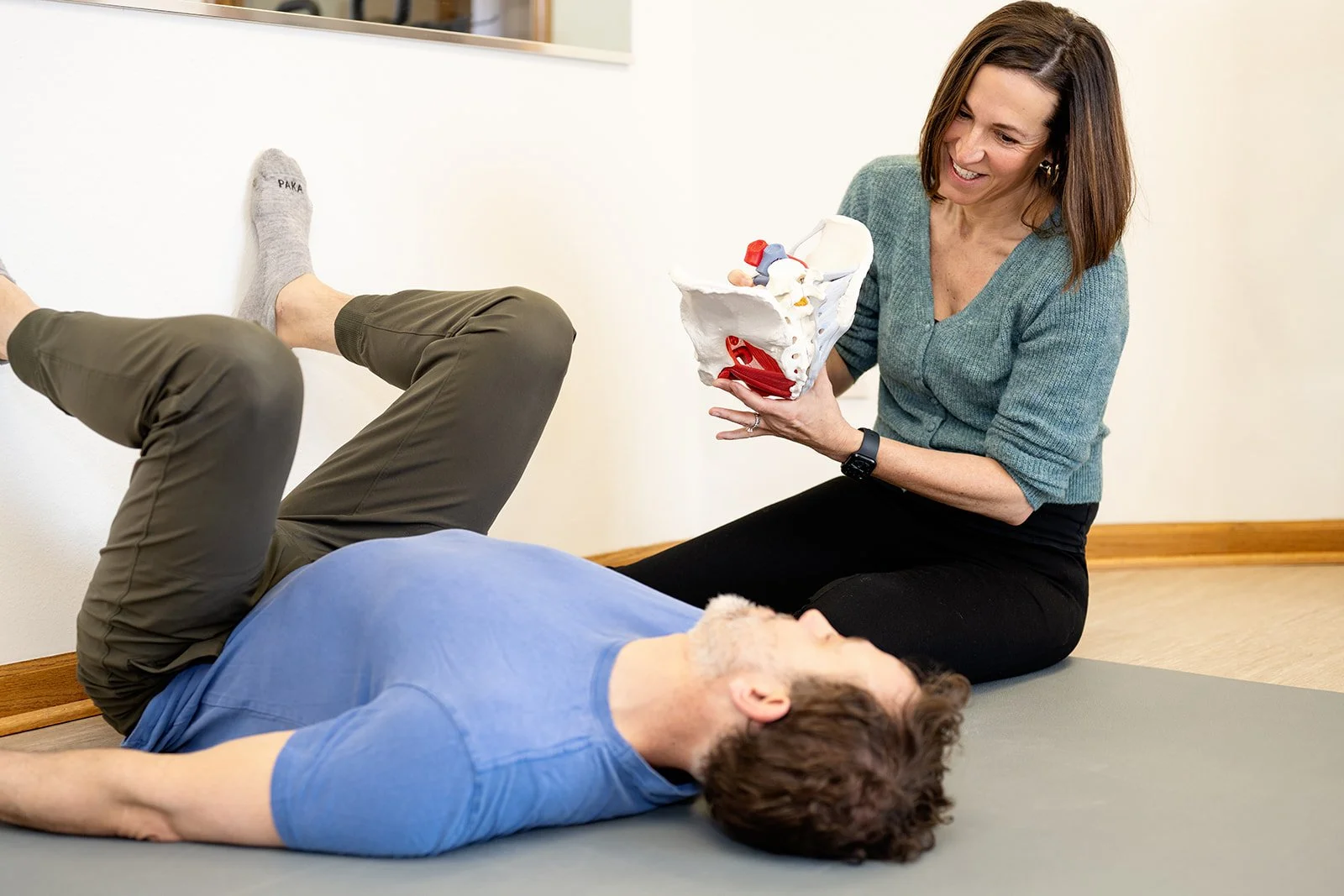
Prostate Surgery Support
Urinary leakage and sexual dysfunction are common after prostate surgery, but with the right support, recovery can be smoother and more predictable. We support you before and after surgery to help you regain control and confidence.
Before surgery, we guide you through pelvic floor exercises, bladder strategies, and habits that support healing, and after surgery, we help rebuild coordination, improve bladder control, and support your return to activity. Research shows that starting pelvic floor therapy before surgery can help you regain control sooner and we’re here to support you every step of the way.
Pelvic Pain in Men
Pelvic pain in men is more common than many realize and often misunderstood or misdiagnosed. You might notice discomfort with sitting, urinary symptoms, or pain that doesn’t seem to have a clear cause. These symptoms are frequently labeled as “prostatitis,” but in many cases, they are related to muscle tension, coordination issues, or restrictions in the pelvic floor and surrounding structures. We take a whole-body approach to understand what’s contributing to your symptoms and create a plan to reduce pain and restore function.


Bowel Concerns
Bowel issues can be frustrating, uncomfortable, and sometimes difficult to talk about, but they are more common than you might think. Constipation, urgency, incomplete emptying, bowel leakage, or discomfort with bowel movements are often linked to coordination and relaxation of the pelvic floor muscles. Through a combination of visceral mobilization, relaxation training, and individualized strategies, we help restore more comfortable and regular bowel function without straining or fear.
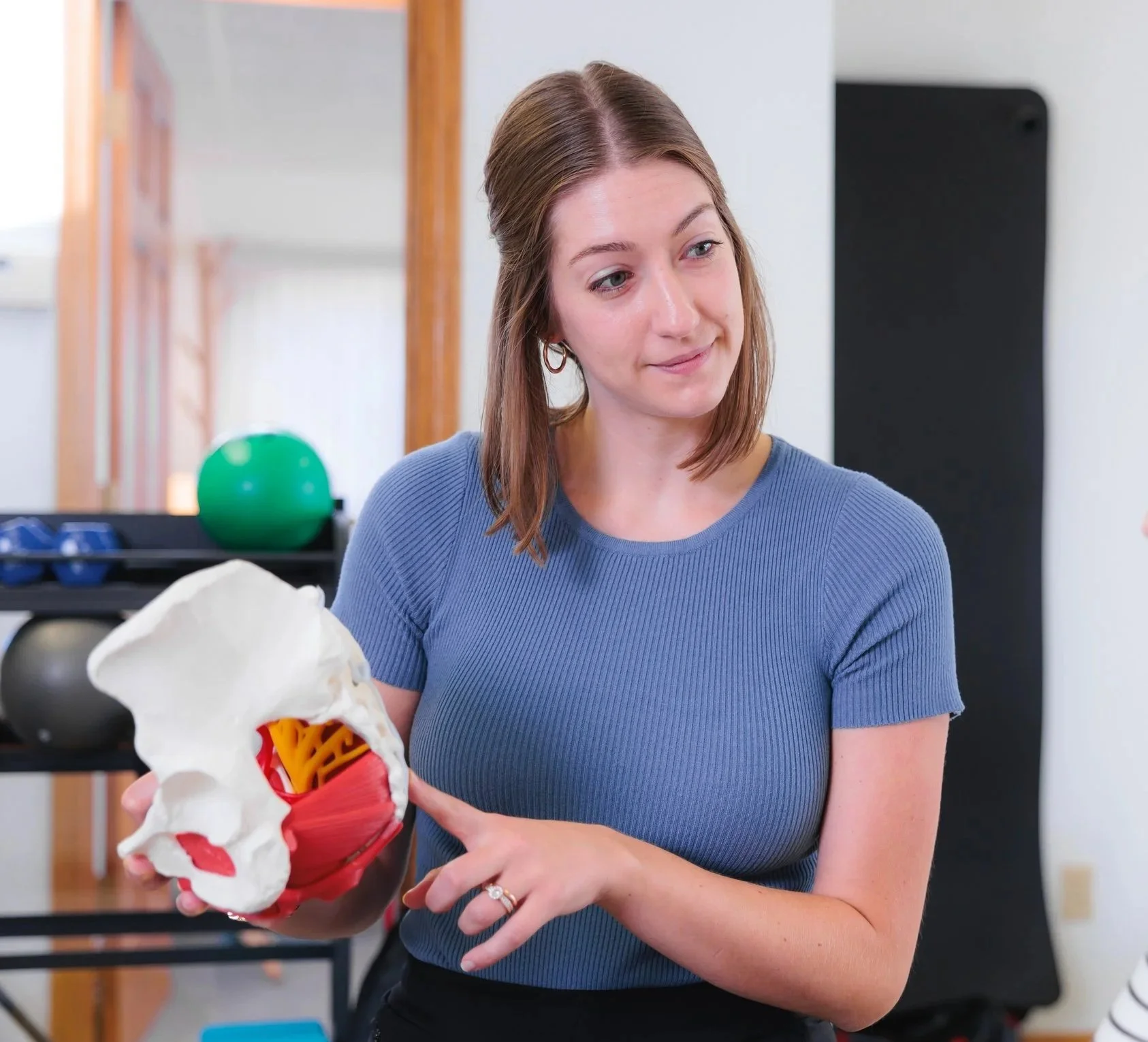
Bladder Concerns
Bladder symptoms can significantly impact your daily life, but they are treatable. You may notice leakage with activity, a sudden urge to go, frequent trips to the bathroom, or waking at night. These symptoms are often related to coordination and control of the pelvic floor rather than just “weakness.” We take a whole-body approach to improve muscle coordination, retrain bladder habits, and identify lifestyle factors that may be contributing so you can feel more in control and confident day to day.
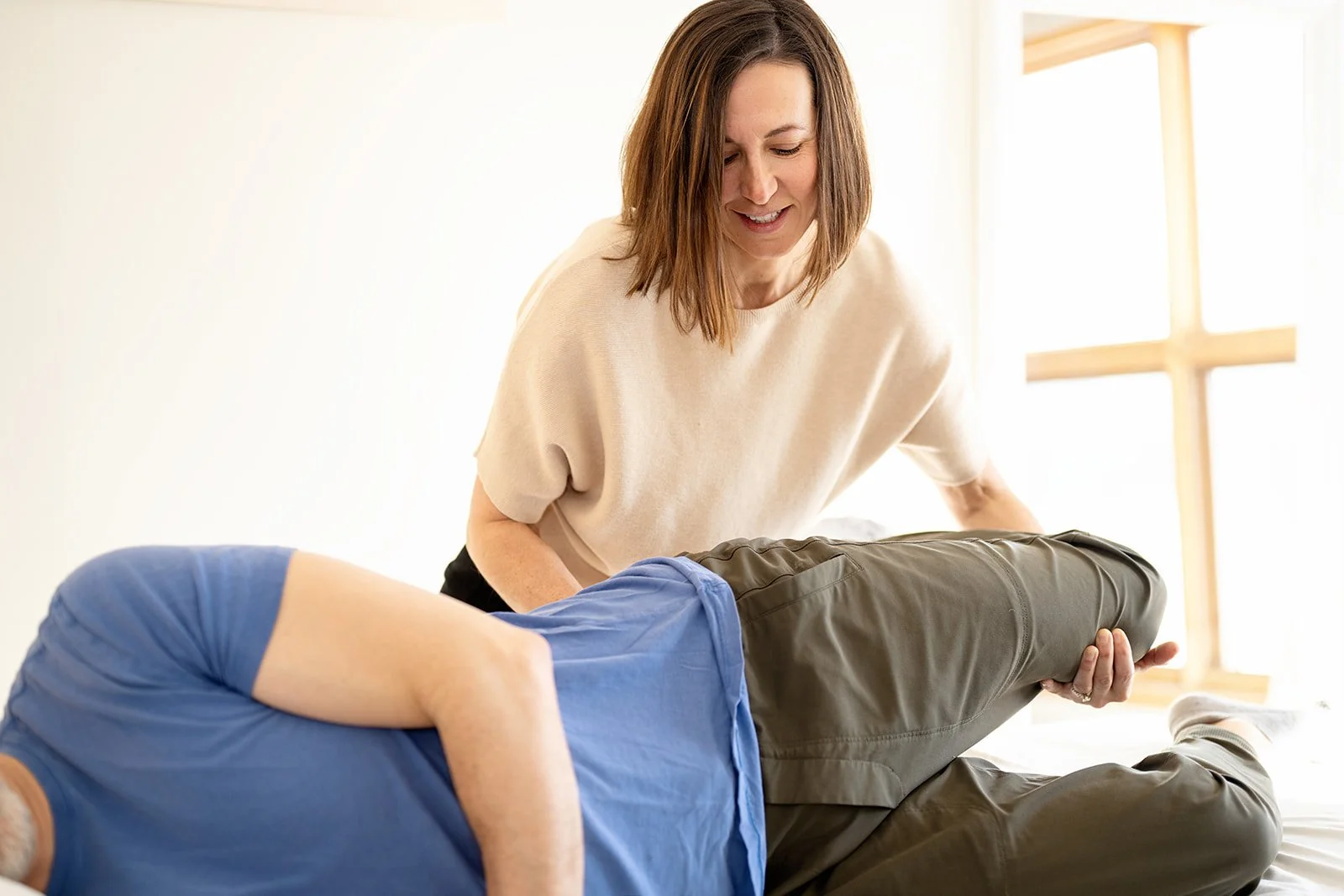
Musculoskeletal Pain
Sometimes pelvic symptoms are connected to other areas of the body, such as the low back, hips, or abdominal wall. Many men come to us after trying traditional physical therapy without lasting relief, only to discover that pelvic floor or deeper tissue restrictions were contributing to their symptoms. We take an integrated approach that combines pelvic health physical therapy and visceral techniques to improve movement, reduce pain, and help you return to the activities that matter most.
“I saw significant improvement after just four sessions. Katie combined hands-on treatment with exercises I could do between visits, and it made a real difference.”
— JohnRelated reading from our blog
Want to learn more? These resources may help you better understand how pelvic floor physical therapy can support men’s pelvic health.



Frequently Asked Questions
-
Pelvic floor physical therapy for men is specialized physical therapy that looks at how the pelvic floor muscles, bladder, bowels, core, hips, back, and nervous system are working together.
The pelvic floor is a group of muscles at the base of the pelvis. These muscles help support bowel, bladder, and sexual function, and they also work with the deep core, diaphragm, hips, and low back during movement.
At Cultivate Your Wellbeing, men’s pelvic floor physical therapy is not a one-size-fits-all exercise program. We take time to understand your symptoms, your goals, and what may be contributing to the problem so we can create a treatment plan that is specific to you.
-
Pelvic floor physical therapy for men can support a wide range of concerns, including bladder leaks, urinary urgency and frequency, constipation, pelvic pain, tailbone pain, groin pain, pain with sitting, sexual health concerns, and recovery after prostate surgery.
We also see many men with symptoms that do not seem obviously “pelvic” at first, such as low back, hip, abdominal, or core pain that has not fully improved with other approaches. Because the pelvic floor works closely with the hips, spine, abdomen, and breathing system, it can sometimes be an important missing piece.
Your treatment plan will depend on your evaluation, symptoms, comfort level, and goals.
-
Not necessarily. An internal pelvic floor assessment can be helpful for some patients, but it is never required.
For men, an internal pelvic floor assessment is typically performed rectally and can give us more specific information about pelvic floor muscle tension, coordination, strength, tenderness, and relaxation. We will always explain your options, answer your questions, and ask for your consent before any part of the exam or treatment. Many people begin with external assessment, movement evaluation, breathing and pressure management, manual therapy, education, or a home program.
Our priority is that you feel informed, respected, and comfortable with your care.
-
Yes. Pelvic floor physical therapy can help men with bladder urgency, frequency, leaking, post-void dribbling, and difficulty fully emptying.
Bladder symptoms are not always just about a “weak” pelvic floor. Sometimes the pelvic floor muscles are tense, overactive, poorly coordinated, or not relaxing well. Bladder habits, fluid intake, constipation, stress, breathing patterns, and pressure management can also play a role.
Treatment may include pelvic floor coordination, bladder retraining strategies, urge suppression techniques, bowel support, breathing work, strengthening when appropriate, and education to help you better understand what your body is doing.
-
Yes. Pelvic floor physical therapy can be very helpful for men with pelvic pain, perineal pain, rectal pain, testicular pain, penile pain, pain with sitting, pain with ejaculation, or symptoms often described as chronic prostatitis or chronic pelvic pain syndrome.
In many cases, pelvic pain is not caused by one single structure. The pelvic floor muscles, hips, low back, nerves, bladder, bowels, abdominal wall, stress response, and movement patterns can all contribute.
Our approach is to look at the whole picture. Treatment may include manual therapy, pelvic floor downtraining, mobility work, breath and nervous system strategies, posture and sitting modifications, strengthening, and a plan to help you return to daily activities with more confidence.
-
Yes. The pelvic floor is part of a larger system that includes the hips, low back, abdomen, diaphragm, and deep core. When one part of that system is not coordinating well, symptoms can show up in nearby areas.
For some men, pelvic floor tension or poor coordination can contribute to low back pain, hip pain, groin pain, tailbone pain, abdominal discomfort, or pain that keeps returning despite other treatment.
That does not mean every back or hip problem is caused by the pelvic floor. It means the pelvic floor may be one piece worth evaluating, especially when symptoms are persistent, recurrent, or connected with bladder, bowel, or pelvic symptoms.
-
Yes. Pelvic floor physical therapy can help men prepare for and recover after prostate surgery, including prostatectomy.
Before surgery, pelvic floor therapy can help you learn how to correctly coordinate the pelvic floor, improve awareness, and understand strategies that may support recovery. After surgery, therapy often focuses on bladder control, leaking, pressure management, gradual strengthening, scar or abdominal mobility when appropriate, and returning to activity safely.
Many people are told to “do Kegels,” but pelvic floor recovery is more than simply squeezing harder. We help make sure you are using the right muscles, relaxing well between contractions, coordinating with your breath, and progressing in a way that matches your body and goals.
-
It can be hard to tell on your own because pelvic floor symptoms can overlap. Leaking, urgency, constipation, pain, pressure, and difficulty relaxing can sometimes be related to weakness, tension, poor coordination, or a combination of factors.
For example, a tight pelvic floor is not necessarily a strong or well-functioning pelvic floor. Muscles that are tense all the time may have trouble relaxing, coordinating, or generating strength when needed.
A pelvic floor physical therapy evaluation can help determine what your body needs. Some patients need strengthening. Others need relaxation, mobility, coordination, nervous system support, or a combination of these. Your plan should be based on your actual presentation, not a generic exercise list.
-
No. Wisconsin is a direct access state, which means you do not need a physician referral to schedule a physical therapy appointment. At Cultivate Your Wellbeing, you can call or text us directly to get started.
If you have questions about whether pelvic floor physical therapy is the right next step, you can call or text our office or request a free 15-minute virtual consult.
Not Sure Where to Start?
Men’s pelvic health symptoms can overlap. If you are navigating pelvic pain, bladder or bowel symptoms, pain with sitting, pain with intimacy or ejaculation, prostate surgery recovery, abdominal discomfort, or pain involving the hips, back, tailbone, or pelvis, we can help you find the right starting point.
You can call, text, or fill out the contact form, whichever is easiest for you. Our team can answer questions, help you schedule at our Mequon or Brookfield location, or set up a free 15-minute virtual consult if you are not sure whether pelvic health physical therapy is the right next step.
Wondering if Pelvic Health Physical Therapy is right for you? Book a Free 15 Minute Consult.