

Postpartum Pelvic Floor Physical Therapy in Mequon and Brookfield, WI
Recovery after birth looks different for everyone. Some people feel ready to ease back into movement quickly, while others are navigating pain, leaking, pelvic pressure, scar discomfort, core weakness, feeding positions, sleep deprivation, or the feeling that their body just does not feel like their own yet.
At Cultivate Your Wellbeing, we provide postpartum pelvic floor physical therapy in Mequon and Brookfield, WI, serving the North Shore, Brookfield, and surrounding communities. Our doctors of physical therapy and certified pelvic health specialists take a whole-body, individualized approach to postpartum recovery.
Whether you had a vaginal birth, C-section, tearing, a long labor, a fast delivery, or a birth experience that did not go as planned, postpartum pelvic floor physical therapy can meet you where you are. For some people, that means addressing symptoms that are affecting daily life. For others, it means having someone assess how your body is healing and guide you through a safe, confident return to movement, exercise, intimacy, and the activities you love.
Postpartum healing is more than “waiting six weeks”
Many people are told they are “cleared” at their six-week postpartum visit, but still do not feel ready to return to exercise, intimacy, lifting, running, or daily life without symptoms. Being cleared medically does not always mean your pelvic floor, core, scar tissue, hips, back, and pressure system are ready for everything you want to do.
Postpartum pelvic floor physical therapy helps bridge that gap.
We take time to listen to your story, assess how your body is functioning, and create a plan based on your symptoms, your birth experience, your goals, and your season of life. You do not need to wait until symptoms feel severe to get support, and you do not need to accept leaking, pain, pressure, or weakness as “just part of motherhood.”
Common postpartum symptoms we treat
Postpartum pelvic floor physical therapy may help with:
Bladder leaking with coughing, sneezing, lifting, jumping, or exercise
Urinary urgency or frequency
Pelvic heaviness, pressure, or prolapse symptoms
Pelvic pain or pain with intimacy
Perineal pain, tearing, episiotomy scars, or scar sensitivity
C-section scar discomfort, tightness, numbness, or pulling
Diastasis recti or abdominal separation concerns
Core weakness or feeling disconnected from your body
Low back, hip, tailbone, pubic bone, or SI joint pain
Constipation, hemorrhoids, or difficulty emptying
Pain with sitting, walking, lifting, or returning to activity
Rib, neck, shoulder, or upper back discomfort related to feeding and baby care
Difficulty returning to exercise, running, lifting, or Pilates
Feeling unsure how to safely rebuild strength postpartum
You do not have to have a specific diagnosis before starting care. Part of our role is helping you understand what may be contributing to your symptoms and what your body may need next.
Postpartum recovery is not one-size-fits-all. Your body deserves care whether you had a vaginal birth, a C-section, or both.
Support after vaginal birth and C-section birth
Postpartum recovery is not one-size-fits-all. Your body deserves care whether you had a vaginal birth, a C-section, or both.
After a vaginal birth, we may support pelvic floor coordination, perineal scar mobility, pain with intimacy, pelvic heaviness, bladder or bowel symptoms, and gradual return to movement and strength.
After a C-section, we may support scar mobility, abdominal wall healing, core coordination, posture, pressure management, back or hip pain, and return to lifting, exercise, and daily activities. Even with a C-section, your pelvic floor still carried the load of pregnancy and may benefit from assessment and support.
No matter how you delivered, your recovery matters.
What postpartum treatment may include
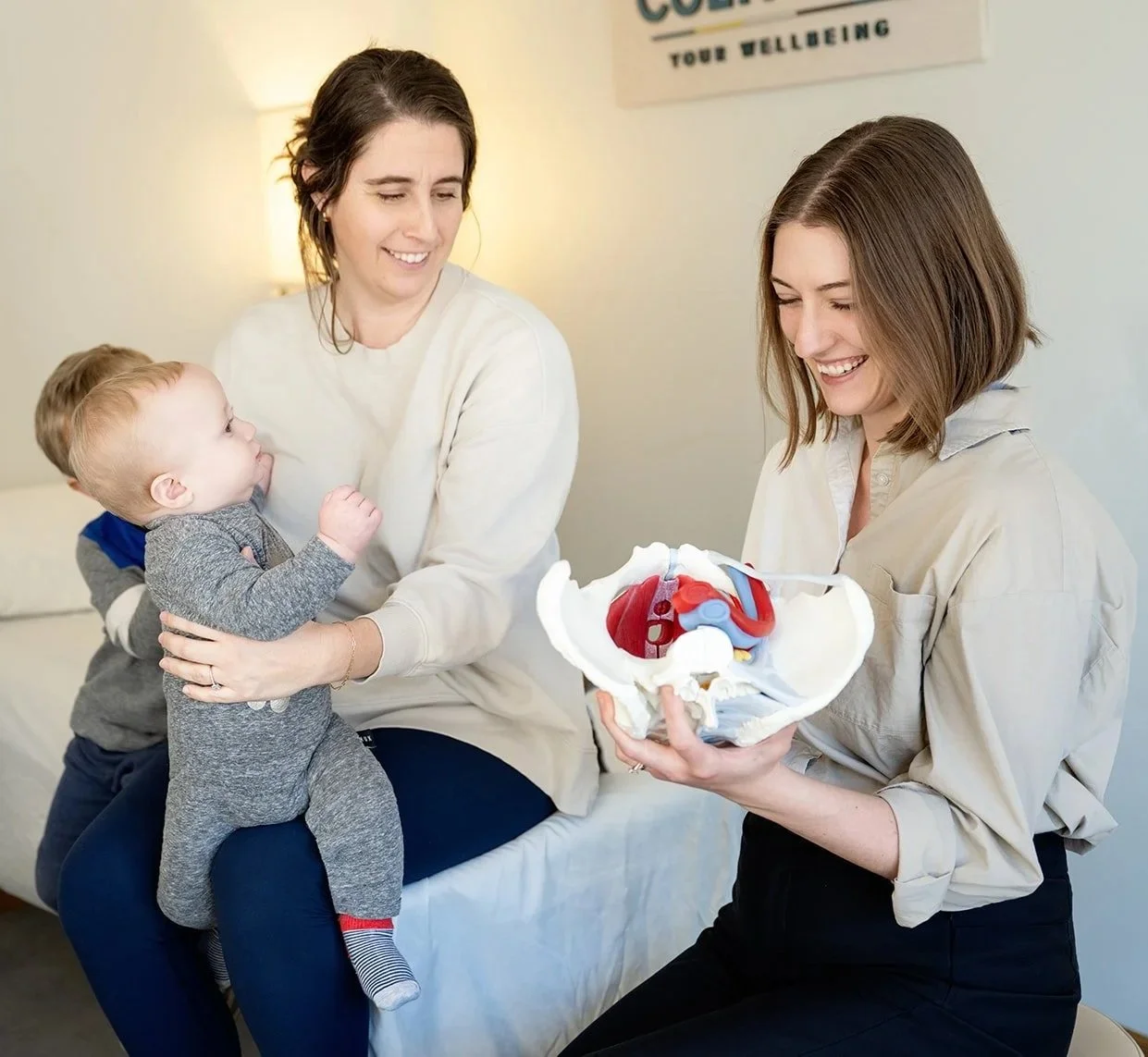
Your treatment plan will depend on your evaluation, symptoms, comfort level, and goals. We always meet you where you are. Postpartum pelvic floor physical therapy may include:
Pelvic floor assessment and coordination
Core and deep abdominal retraining
Breathwork and pressure management
Gentle mobility and strengthening
C-section scar or perineal scar mobility
Manual therapy for the abdomen, pelvis, hips, back, ribs, or pelvic floor
Support for bladder leaking, urgency, or frequency
Bowel and constipation strategies
Guidance for pain with intimacy
Diastasis recti assessment and progression
Return-to-exercise planning
Running, lifting, and impact progression when appropriate
Strategies for feeding posture, babywearing, lifting, and daily movement
A personalized home program that fits your real life
Some people need help relaxing and reconnecting with the pelvic floor. Others need strength, pressure management, mobility, scar work, or return-to-exercise progression. Many people need a combination. Your plan should be based on your body, not a generic postpartum checklist.
You can come early, and you can come later
Postpartum support can begin before the six-week mark for education, gentle movement, breathing, scar guidance when appropriate, feeding posture, pain support, and early recovery strategies. We can also help you understand what is normal, what may need more support, and how to gradually reconnect with your body.
You can also come months or years after birth. It is never “too late” to address postpartum symptoms. Many people seek care long after delivery because they are still dealing with leaking, pain, pressure, scar discomfort, core weakness, or difficulty returning to the activities they love.
Whether you are newly postpartum or years beyond birth, you deserve care that helps you feel stronger, more supported, and more confident.
Returning to exercise postpartum
Returning to exercise is not just about waiting a certain number of weeks. It is about how your body is managing load, pressure, strength, coordination, and symptoms.
If you are having leaking, heaviness, pain, doming through the abdomen, pelvic pressure, or the feeling that your body is not ready, those symptoms are information. They do not mean you failed or that you can never return to the activities you love. They mean your body may need a different progression, more support, or a better strategy.
We help you rebuild from the inside out so you can return to walking, running, strength training, Pilates, group fitness, sports, or daily life with more confidence.
You deserve support in your recovery
Postpartum recovery is often treated like something you are supposed to figure out on your own. But birth is a major physical event, and healing deserves more than a quick check and generic advice. You deserve support that helps you understand your body, rebuild strength, and feel confident in your recovery.
At Cultivate Your Wellbeing, we believe postpartum people deserve to be heard, supported, and given practical tools for recovery. We are here to help you understand your body, address your symptoms, and build a plan that supports your goals in this season of life.
Related reading from our blog
Want to learn more? These resources may help you better understand how pelvic floor physical therapy can support postpartum recovery.

Patient Experiences
“After having my baby, I struggled to reconnect with my core and had lingering pain. Katie and Jennie listened and created a plan that helped me feel like myself again. By the end of treatment, I was moving and exercising better than I was pre-pregnancy.”
“If you are postpartum this is a must. I came to Cultivate with high recommendation from my OB and was not disappointed. I had gone to another pelvic floor PT and left being told to do kegels. I have now consistently gone to Katie and Jennie and felt better, found exercises, and gotten my life back.”
“Following my second c-section this past year, I had started to experience quite intense pain along my front pelvic area and back. My doctor recommended I see Katie at Cultivate Your Wellbeing and I’m so glad she did! Not only is Katie beyond knowledgeable, but she is super welcoming and makes you feel comfortable being in her space. We had weekly visits to address areas of tightness my body had developed carrying a baby and from having a major surgery, discussed how to massage my scar tissue properly and provided me with exercises that helped stretch/relieve areas of tension as well as start to slowly engage and build back my core. Six quick sessions later and I have officially “graduated” and am pain free!”
Frequently Asked Questions
-
You can start postpartum pelvic floor physical therapy at different points depending on your needs, symptoms, and goals.
Some people come in before their six-week postpartum visit for education, gentle movement, breathing, feeding posture, pain support, and early recovery strategies. Others start after they have been cleared by their medical provider and are ready to rebuild strength, return to exercise, address symptoms, or better understand how their body is healing.
There is no one perfect timeline. If you are having pain, leaking, pressure, scar discomfort, difficulty moving, or you simply want guidance for recovery, pelvic floor physical therapy can help you understand what your body needs next.
-
Not always. The six-week visit is an important medical check-in, but it does not have to be the first time you receive support for your recovery.
In the early postpartum weeks, pelvic floor physical therapy may focus on education, breathing, gentle mobility, pressure management, feeding and lifting positions, bowel and bladder support, and helping you understand what is normal and what may need more attention.
We will always modify care based on how recently you gave birth, how you are healing, your symptoms, your birth experience, and any guidance from your OB, midwife, or medical team. More specific internal assessment, scar work, strengthening, and return-to-exercise progression may come later when appropriate.
-
Postpartum pelvic floor physical therapy can help with many concerns that may show up after pregnancy and birth.
This may include bladder leaking, urgency or frequency, pelvic heaviness or pressure, prolapse symptoms, pelvic pain, pain with intimacy, perineal pain, C-section scar discomfort, diastasis recti, core weakness, low back pain, hip pain, tailbone pain, pubic bone pain, constipation, difficulty returning to exercise, or the feeling that your body just does not feel like your own yet.
It can also be helpful even if you do not have major symptoms. Many people come to have their pelvic floor, core, scar tissue, posture, movement, and pressure system assessed so they can return to exercise, lifting, intimacy, and daily life with more confidence.
-
Leaking after birth is common, but common does not mean you have to live with it.
Bladder leaking may happen with coughing, sneezing, laughing, lifting, running, jumping, or when you feel a strong urge to go. It can be related to pelvic floor weakness, pelvic floor tension, poor coordination, pressure management, bladder habits, scar tissue, constipation, or how your core and pelvic floor are working together.
Postpartum pelvic floor physical therapy can help identify what is contributing to the leaking and create a plan that fits your body. The answer is not always simply “do more Kegels.” Some people need strengthening, some need relaxation and coordination, and many need a combination.
-
Yes. Pelvic floor physical therapy can help with pelvic heaviness, pressure, bulging sensations, or prolapse symptoms after birth.
These symptoms can feel scary, especially when they show up with standing, walking, lifting, exercise, or at the end of the day. Pelvic floor physical therapy can help you understand what is happening, how your pelvic floor and core are responding to pressure, and what strategies may help reduce symptoms.
Treatment may include pelvic floor coordination, breathing, pressure management, posture and movement support, strengthening, bowel and bladder strategies, and a gradual return to activity. The goal is to help you feel more confident in your body, not afraid of movement.
-
es. Pelvic floor physical therapy can help with diastasis recti and postpartum core recovery.
Diastasis recti is not just about the width of the gap between the abdominal muscles. We also look at how your abdominal wall is managing tension, pressure, breathing, movement, and load. Some people notice doming, coning, weakness, back pain, rib tightness, or difficulty returning to exercise. Others simply want to know how their core is healing and how to rebuild strength safely.
Treatment may include breathwork, deep core coordination, pressure management, posture and movement strategies, rib mobility, visceral manipulation or gentle abdominal manual therapy when appropriate, progressive strengthening, and guidance for lifting, carrying, exercise, and daily activities.
-
Yes. Pelvic floor physical therapy can be very helpful after a C-section.
Even if you did not have a vaginal birth, pregnancy still placed demands on your pelvic floor, core, hips, back, bladder, bowels, and abdominal wall. After a C-section, there may also be scar tightness, numbness, sensitivity, pulling, abdominal weakness, back pain, difficulty lifting, or uncertainty about how to reconnect with your core.
Postpartum pelvic floor physical therapy may include C-section scar education and mobility when appropriate, abdominal wall recovery, breathwork, pressure management, pelvic floor and core coordination, posture support, and gradual return to exercise and daily activity.
-
Returning to exercise postpartum is not only about how many weeks it has been since birth. It is about how your body is healing, how your pelvic floor and core are managing pressure, and whether symptoms show up as you increase activity.
Walking, gentle mobility, breathing, and early reconnection may begin earlier for many people when appropriate. Higher-impact activities like running, jumping, and heavy lifting usually need a more gradual progression.
If you notice leaking, pelvic heaviness, pain, pressure, abdominal doming, scar discomfort, or the feeling that your body is not ready, those symptoms are information. They do not mean you failed or that you cannot return to the activities you love. They mean your body may need a different progression, more support, or a better strategy.
Pelvic floor physical therapy can help you rebuild strength and return to exercise with more confidence.
-
Not necessarily. An internal pelvic floor assessment can be helpful for some postpartum patients, but it is never required.
An internal assessment may give us more specific information about pelvic floor tension, tenderness, strength, coordination, relaxation, scar tissue, and how the muscles respond to breath or movement. It can be especially helpful for symptoms like pelvic pain, pain with intimacy, leaking, heaviness, difficulty relaxing, perineal scar discomfort, or birth-related tearing.
However, many patients receive postpartum pelvic floor physical therapy without an internal exam. We can also assess posture, breathing, movement, hips, low back, abdomen, C-section scar mobility, pressure management, and external pelvic floor function.
We will always explain your options, answer your questions, and ask for your consent before any part of the exam or treatment. Your comfort matters.
-
No. It is not too late.
Many people start pelvic floor physical therapy months or years after birth because they are still dealing with leaking, pain, pressure, scar discomfort, core weakness, pain with intimacy, difficulty returning to exercise, or symptoms that seemed manageable until life got busier or activity increased.
Postpartum symptoms can still improve long after birth. Your body may need support with strength, mobility, pressure management, scar tissue, pelvic floor coordination, bowel or bladder habits, or gradual return to the activities you love.
Whether you are six weeks postpartum or several years beyond birth, you deserve care that helps you feel stronger, more supported, and more confident.
-
Yes. We know postpartum life is full, and finding childcare is not always simple.
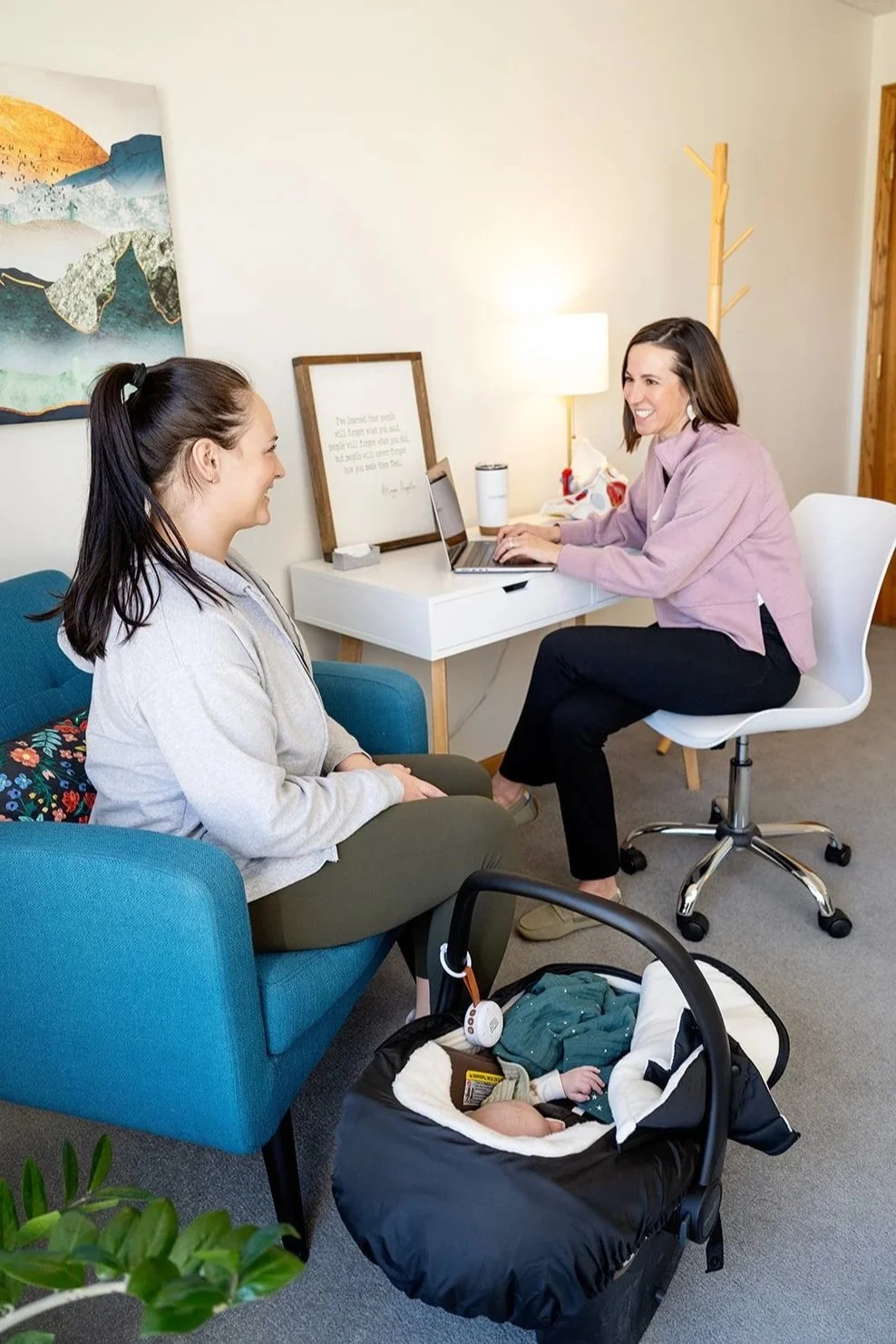
You are welcome to bring your baby to your postpartum physical therapy appointment. We do our best to make visits feel comfortable and realistic for this season of life. Babies may sleep, feed, play nearby, or need to be held during part of the visit, and we will work with you.
When available, our front desk team is also happy to help hold a baby, play with a child, or offer an extra set of hands so you can have fewer disruptions during your appointment.
Your care does not have to look perfect to be helpful. We want you to feel welcome and supported, baby and all.
-
No. In Wisconsin, you can schedule physical therapy without a physician referral. At Cultivate Your Wellbeing, you can call or text us directly to get started.
We also value collaboration with your medical team. While a referral is not required, many patients choose to have us send their evaluation findings and treatment plan to their OB, midwife, primary care provider, or other healthcare provider. We are also happy to communicate with your provider if questions or concerns come up during postpartum recovery.
If you are not sure whether pelvic floor physical therapy is the right next step, you can call or text our office or request a free 15-minute virtual consult. We would be happy to talk through what you are experiencing and help you decide whether an evaluation makes sense.
What to Expect
Your care is always one-on-one and tailored to your goals. Sessions may include hands-on treatment, movement and exercise, and education to help you better understand your body and symptoms. We move at your pace and prioritize your comfort every step of the way.
Not Sure Where to Start?
You’re not alone. Many people come in unsure of what pelvic health physical therapy involves or whether it can help. We’re here to answer your questions, understand your concerns, and guide you through the process.
Wondering if Pelvic Health Physical Therapy is right for you? Book a Free 15 Minute Consult.