
When Diet Isn’t Enough: Hands-On Pelvic Floor Therapy for Constipation
If you have tried drinking more water, eating more fiber, changing your diet, or taking supplements and you are still constipated, it may be time to look beyond what you are eating.
At Cultivate Your Wellbeing, we often see people who feel like they have “tried everything,” only to discover that their pelvic floor, abdominal wall, breathing patterns, nervous system, or the mobility of the tissues around the abdomen and pelvis may be playing a bigger role than they realized.
Constipation is not always just about stool consistency. Sometimes, stool is ready to pass, but the body is not coordinating well enough to let it out.
Let’s talk about how pelvic floor physical therapy can help with constipation, especially when diet changes alone have not been enough.
It is not just the gut. It is the muscles too.
When we think about constipation, we usually think about digestion. But for stool to leave the body, the pelvic floor muscles need to relax, lengthen, and coordinate with the abdomen and breath. For many people, that does not happen easily.
Instead of relaxing during a bowel movement, the pelvic floor may tighten, grip, or push back. The abdominal wall may brace. The breath may get held. The body may try harder and harder, but the muscles are not working together in a way that allows stool to pass smoothly.
This is one reason people can eat fiber, drink water, move their body, and still feel stuck.
What is dyssynergic defecation?
Dyssynergic defecation, sometimes called pelvic floor dyssynergia, is a coordination problem between the abdominal muscles and pelvic floor during a bowel movement.
Instead of relaxing to allow stool to pass, the pelvic floor muscles may contract or stay tight at exactly the wrong time. This can lead to straining, incomplete emptying, and the frustrating feeling of “it is right there, but it will not come out.”
Signs this may be part of your constipation pattern can include:
You push and strain but still feel backed up
You feel like you cannot fully empty
Bowel movements feel small, thin, or incomplete
You have to change positions to go
You use pressure or splinting to help stool pass
Fiber does not seem to help, or it makes bloating worse
You feel pelvic, rectal, or tailbone discomfort with bowel movements
This pattern is common, and it is treatable. The goal is not to push harder. The goal is to help the body coordinate better.
What we often see in the clinic
When people come to us for constipation, we often see a few common patterns. Some people have pelvic floor muscles that are tight, overactive, or unable to fully relax when they sit on the toilet. Others are unintentionally holding their breath or bracing through their abdomen, which increases pressure and tension instead of helping stool pass.
We also frequently see poor coordination between the diaphragm, abdominal wall, and pelvic floor. These systems are designed to work together, especially during bowel movements. When they are out of sync, emptying can feel effortful or incomplete.
Sometimes there is restricted mobility through the abdomen, pelvis, hips, low back, or tailbone. For others, there is a history of guarding or tension from past pain, birth, surgery, trauma, chronic stress, or years of struggling to go.
These are not issues that fiber or supplements alone can always fix. This is where pelvic floor physical therapy can make a meaningful difference.
How pelvic floor physical therapy helps constipation
At Cultivate Your Wellbeing, we take a whole-body, individualized approach to treating constipation. We look beyond how often you are having bowel movements. We assess how your pelvic floor, abdominal wall, core coordination, breathing, posture, pelvic mobility, and toilet habits may be contributing to your symptoms.
Treatment may include education on toilet posture, breathing, and helping to coordinate abdominal pressure and pelvic floor relaxation. We may also work on pelvic floor relaxation, coordination, and strengthening when appropriate.
A key part of our approach may also include hands-on treatment.
Hands-on therapy for constipation
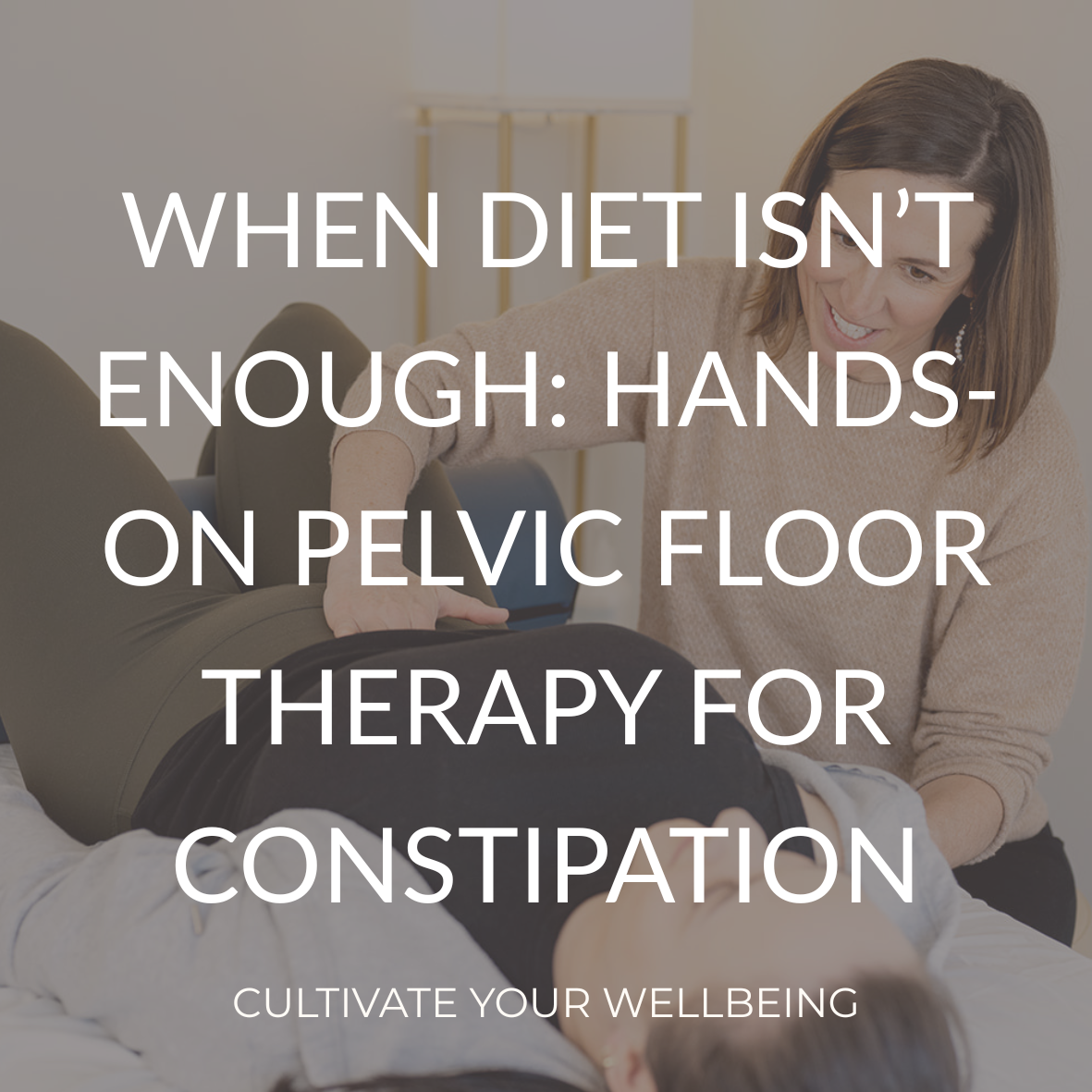
Manual therapy can be helpful when tension, guarding, restricted mobility, or poor coordination are contributing to constipation. This may include external techniques through the abdomen, hips, pelvis, low back, or tailbone region. When appropriate and with your consent, it may also include internal pelvic floor treatment to help the muscles release, lengthen, and coordinate more effectively.
The goal is not to force the body. The goal is to help the tissues move better, reduce unnecessary guarding, and support a more coordinated bowel movement.
For some people, hands-on treatment helps them finally feel what pelvic floor relaxation is supposed to feel like. For others, it helps reduce pain, tension, or the sense of restriction that makes emptying harder.
Visceral manipulation and abdominal mobility
One of the tools we may use for constipation is visceral manipulation. Visceral manipulation is a gentle, hands-on approach that looks at the mobility of the abdominal organs, surrounding fascia, and their relationship to the musculoskeletal system. When tissues in the abdomen or pelvis feel restricted, guarded, or sensitive, it may affect comfort, pressure, and how the body moves as a whole.
At Cultivate Your Wellbeing, our visceral work is performed by providers trained through the Barral Institute. This approach is gentle and responsive. We follow what your body is ready for rather than pushing, forcing, or trying to “make” something happen.
For people with constipation, visceral manipulation may be used alongside pelvic floor coordination, breathing strategies, toilet positioning, movement, and bowel habit education. It is not a stand-alone magic fix, but it can be a helpful part of a bigger treatment plan.
It is not just muscles, but muscles matter
Constipation is rarely caused by just one thing. Pelvic floor dysfunction may be a major part of the picture, but lasting relief often comes from addressing the whole system. That includes stool consistency, hydration, movement, stress, toilet habits, breath, abdominal mobility, medications, hormones, and how your pelvic floor coordinates during emptying. That is why our constipation series looks at the full picture.
If you are not sure whether fiber is helping or hurting, our fiber blog is a good place to start. If you are straining or holding your breath on the toilet, our toilet posture and breathing blog walks through simple strategies that can make bowel movements feel easier.
This post focuses on what happens when those foundations are not enough and your body needs more individualized support.
Learn more in our constipation series
This post is part of our constipation series, where we look at constipation from a pelvic health perspective and explore the many factors that can affect bowel regularity, stool consistency, and complete emptying.
You can also read:
Fiber for Constipation: Soluble vs. Insoluble Fiber and Why Both Matter
Movement, Hydration, and Supplements for Constipation Relief
Ready to stop straining?
If you have been dealing with constipation for weeks, months, or years, you do not have to keep pushing through it. Pelvic floor physical therapy offers a gentle, whole-body approach that looks at what is actually contributing to your symptoms. Whether your pelvic floor needs retraining, your abdominal tissues need mobility support, your toilet habits need a reset, or your nervous system needs help calming down, we are here to help.
At Cultivate Your Wellbeing, our pelvic health physical therapists support people with constipation, straining, incomplete emptying, bloating, pelvic floor dysfunction, rectal discomfort, and related bladder or pelvic symptoms.
If you are ready for support, schedule an initial evaluation at our Mequon or Brookfield location. If you are not sure where to begin, a free 15-minute virtual consult can be a great first step.